

Homeownership comes with its fair share of questions, especially when it comes to what’s actually protected under homeowners insurance. Plenty of property owners assume it covers everything, but that is rarely the case. Reviewing your homeowner’s insurance policy with an insurance agent helps clarify which protections apply to the structure, belongings, liability risks, living expenses, and disaster-related gaps. Knowing the limits and layers of coverage can make a major difference in your annual homeowner’s insurance rate. The National Association of Insurance Commissioners explains that homeowners insurance generally covers damage to a home, personal property, liability, and additional living expenses, making homeowners insurance coverage important to review before a claim happens.
This discussion breaks down the key protections offered, what is often excluded, and where optional add-ons step in to fill the gaps. Homeowners can use this information to better understand dwelling coverage, personal property protection, liability coverage, loss of use, and natural disaster limitations. Every policy can differ by insurer, location, deductible, and coverage form, so policy details matter. The Insurance Information Institute explains that a standard homeowners policy generally covers the structure, belongings, liability protection, and additional living expenses, making standard homeowners policy coverage useful to understand.
Understanding What Homeowners Insurance Protects
Anyone who has filed a claim after storm damage or a kitchen fire knows how important homeowners insurance really is. Policies tend to cover more than people expect and less than they assume at the same time. Coverage depends on the cause of damage, policy limits, exclusions, deductibles, and whether optional endorsements were added. The Insurance Information Institute explains that wind and hail are among the most frequent causes of homeowners insurance claims, making property damage claims important for homeowners to understand.
- Most plans include structural damage to walls, roof, and attached garages.
- Coverage often applies when damage is caused by covered events such as fire, hail, or theft.
- Every policy has caps, deductibles, exclusions, and fine print worth reviewing.
Dwelling Protection Basics Home Coverage
The structure itself, including the house, walls, roof, windows, and permanent fixtures, gets top priority under dwelling coverage. If something is built in or attached, it may fall under this part of the policy when damage comes from a covered cause. Coverage depends on whether the policy is written on a named-peril or open-peril basis. FEMA explains that mitigation measures such as strengthening roofs, doors, and windows can help reduce disaster damage, making dwelling protection important for long-term home resilience.
- Roof replacement may be included when damage is caused by covered weather events.
- Damage from fire, lightning, or vandalism is commonly included under dwelling coverage.
- Rebuilding costs can exceed market value, making replacement cost coverage worth reviewing.
Personal Property Insurance Coverage
Furniture, electronics, clothing, appliances, and other belongings often fall under personal property protection. When items are stolen, burned, or damaged by a covered event, this part of the policy may help repair or replace them. Some policies may also provide limited coverage for belongings away from the home, but special limits often apply to jewelry, collectibles, firearms, art, and other high-value items. The Insurance Information Institute recommends creating a home inventory to document belongings and support claims, making personal property documentation important for homeowners.
- Belongings may be covered while traveling or stored outside the home, depending on policy terms.
- Coverage limits for high-value items like jewelry or art are usually lower.
- Keeping an inventory with receipts or photos helps speed up claims.
Liability Coverage in Home Insurance
When someone slips on a step or a tree limb damages a neighbor’s property, personal liability coverage may help protect the homeowner. This part of homeowners insurance can help with legal expenses, medical costs, or property damage claims when the homeowner is found responsible for a covered incident. Liability limits vary, and larger households, pets, pools, rental activity, or frequent guests may create higher exposure. The National Association of Insurance Commissioners explains that homeowners insurance can include liability coverage for injuries or damage to others, making home liability protection important for financial security.
- Helps pay medical costs if someone is injured on your property.
- Covers legal defense if you are sued after a covered accident.
- May include property damage accidentally caused to others.
Loss of Use Home Insurance Help
When disaster strikes and staying in the house is not possible, loss of use coverage can help with temporary living arrangements. This may include hotel stays, meals, laundry, storage, pet boarding, or added transportation costs while covered repairs are underway. Coverage only applies when the home is unlivable because of a covered event, so exclusions and limits should be reviewed before disaster strikes. The Insurance Information Institute explains that additional living expenses coverage helps pay extra costs when a covered loss makes a home temporarily uninhabitable, making loss of use coverage important after major damage.
- Pays for short-term lodging while repairs are underway.
- May include meals, laundry, and boarding for pets.
- Coverage applies only when the damage is from a covered event.
Homeowners Insurance Natural Disasters
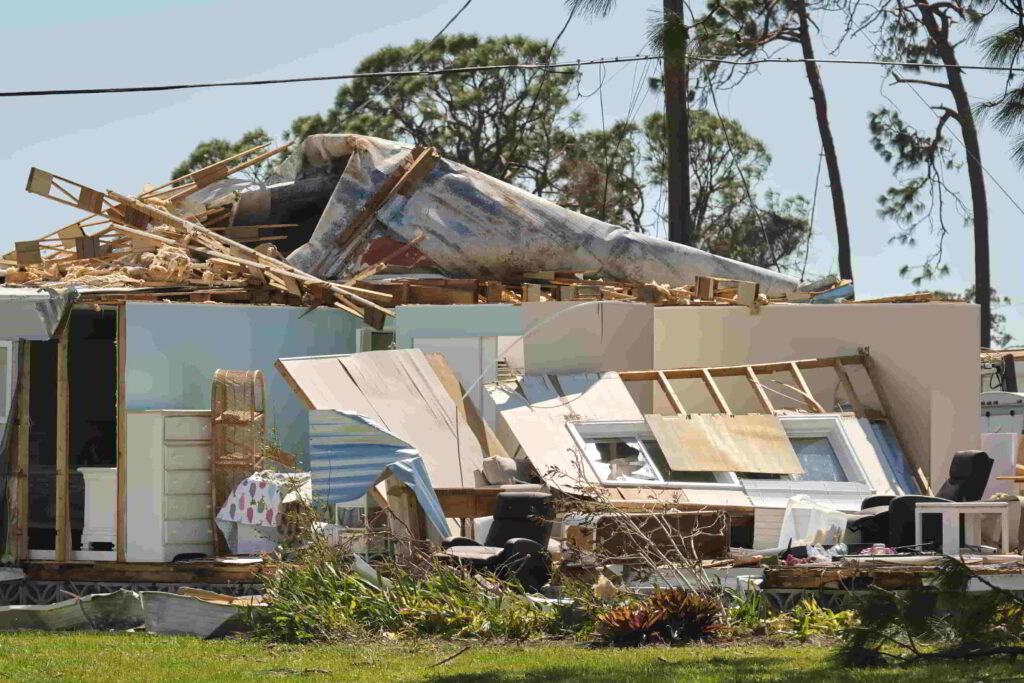
Not every storm or natural event falls under a typical homeowners policy. Earthquakes and floods are often excluded, while tornadoes, lightning, hail, and wildfires may be covered depending on the policy, location, and insurer. Homeowners in higher-risk areas should ask whether separate flood, earthquake, windstorm, or wildfire coverage is needed. FEMA explains that just one inch of floodwater can cause up to $25,000 in damage, making flood insurance important because standard homeowners policies usually do not cover flooding.
- Flood insurance must usually be purchased separately.
- Earthquake coverage is commonly offered as an optional add-on in many states.
- Wildfire and wind coverage can vary based on regional risk and policy terms
- Homeowners in hurricane-prone areas may also face separate wind or named-storm deductibles.
What Is Not Covered by Homeowners Insurance
Wear and tear, termite damage, and neglect will not get you very far with a claim. Insurance exists for sudden, accidental damage, not ongoing maintenance or preventable problems. Homeowners should review exclusions closely so they understand which risks require separate coverage, endorsements, or routine maintenance. The Insurance Information Institute explains that standard homeowners policies generally do not cover damage caused by flood, earthquake, sewer backup, or poor maintenance, making homeowners insurance exclusions important to understand before a loss happens.
- Floods, earthquakes, and sinkholes are typically excluded.
- Neglected repairs, mold, and pest infestations are usually the homeowner’s responsibility.
- Business-related damages may require a separate rider or business policy.
Optional Coverage Add Ons Homeowners Insurance
Standard policies do not always stretch as far as people expect, which is where endorsements and riders come in. These add-ons help fill coverage gaps based on lifestyle, property features, valuables, and regional risks. Homeowners may need extra protection for sewer backups, high-value belongings, identity theft, equipment breakdown, flood risk, or increased rebuilding costs. The National Association of Insurance Commissioners explains that endorsements can add, delete, or change coverage in an insurance policy, making homeowners insurance endorsements useful when standard coverage is not enough.
- Sewer backup coverage protects against expensive water damage.
- Identity theft endorsements may help with restoration and legal costs.
- Valuable item floaters increase protection for jewelry, collectibles, and artwork.
- Equipment breakdown coverage can help with sudden mechanical or electrical failures in major home systems and appliances
How Coverage Limits Affect Claims
Policy limits cap how much an insurer pays out. If damage exceeds those limits, the remaining cost comes out of pocket. That is why reviewing coverage amounts regularly is smart, especially after renovations, market changes, or rising repair costs. The Insurance Information Institute recommends insuring a home for the full cost to rebuild it, making home insurance coverage limits important for avoiding costly gaps after a claim.
- Dwelling and personal property have separate coverage caps.
- Certain categories like electronics, jewelry, or firearms often have sub-limits.
- Underinsuring can lead to major financial losses.
Understanding Homeowners Insurance Deductibles
A deductible is the amount paid out of pocket before insurance kicks in. Some people choose higher deductibles to lower premiums, but that means bigger expenses when disaster strikes. Homeowners should compare flat deductibles, percentage deductibles, and separate wind or hurricane deductibles before deciding what they can afford during a claim. The National Association of Insurance Commissioners explains that deductibles affect both premium costs and claim payments, making homeowners insurance deductibles important to review carefully.
- Deductibles can be flat-rate or percentage-based.
- Wind and hurricane deductibles are often separate and higher.
- Choosing the right deductible balances affordability with risk.
- Homeowners should keep enough emergency savings to comfortably cover the deductible if a claim occurs
When to Update Your Policy
Life moves fast, and so do home values, renovations, and purchases. Each of those changes could affect coverage. Failing to update a policy might mean coming up short during a claim. Homeowners should review coverage after remodeling, buying expensive belongings, adding safety features, starting a home business, or noticing major changes in local rebuilding costs. The National Association of Insurance Commissioners recommends reviewing homeowners insurance each year, making annual policy reviews important for keeping coverage aligned with current needs.
- Home improvements can increase replacement costs.
- Buying expensive items may exceed existing personal property limits.
- Policy reviews help avoid gaps caused by life changes.

Key Takeaways for What Homeowners Insurance Covers
Understanding the layers of protection in homeowners insurance is essential. While structural damage, personal property, and liability are standard, not everything is included. Optional add-ons, deductibles, and limits can significantly change how helpful a policy actually is. Dragon Insurance Agency regularly advises clients to review their coverage annually, especially after major purchases or upgrades.
- Dwelling coverage protects your home’s structure, but rebuilding costs can rise
- Personal property coverage often needs itemized support for high-value items
- Liability insurance helps avoid legal or medical bills from on-site accidents
- Loss of use steps in when living at home isn’t safe
- Add-ons like flood or sewer backup coverage may be necessary based on location
Frequently Asked Questions About Homeowners Insurance Coverage
Is flood damage covered by homeowners insurance?
No. Most standard homeowners policies exclude flood damage. Separate flood insurance through the National Flood Insurance Program (NFIP) is usually required.
How often should I review my homeowners insurance policy?
Every year. It’s also wise to review after home renovations, large purchases, or changes in local rebuilding costs.
What’s the average deductible for homeowners insurance?
Most policies carry a deductible between $500 and $2,500. In some regions, percentage-based deductibles apply for wind or hurricane damage.
Are valuables like engagement rings fully covered?
Not always. Most policies cap jewelry claims at a few thousand dollars. Adding a scheduled personal property endorsement offers fuller protection.
Does homeowners insurance cover my home business equipment?
Limited coverage might exist, but it’s often not enough. Business-specific insurance is recommended for proper protection.